How we serve 150 free lunches for less than 20 cents each using homebrew equipment
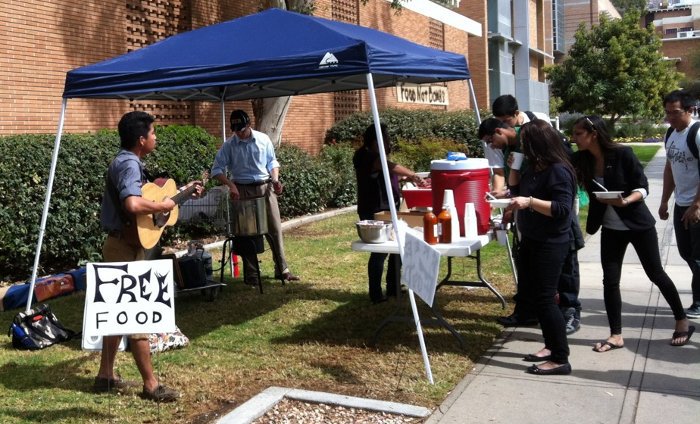
I enjoy brewing beer, and have invested a lot into equipment. But most of this equipment is useful for more than just beer. We can use it to make food! Some friends and I do this with a group called food not bombs. Basically, we just serve free lunches at our local college campus, no strings attached. It’s a great way to connect with your community and make friends.
So what homebrew equipment do I have? A pretty typical all-grain brewing set up.
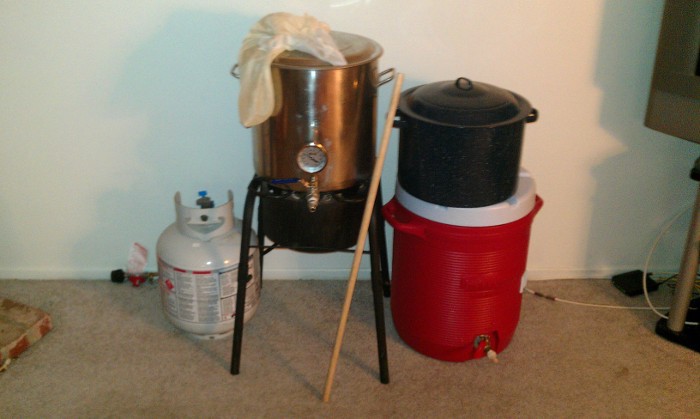 Here’s the stuff that we can also use for food:
10 gallon pot
5 gallon pot (this is leftover from when I first started brewing doing partial boils)
10 gallon water cooler
mash tun stirrer (I use a wooden dowel bought from Lowes)
hops bag
Outdoor propane burner
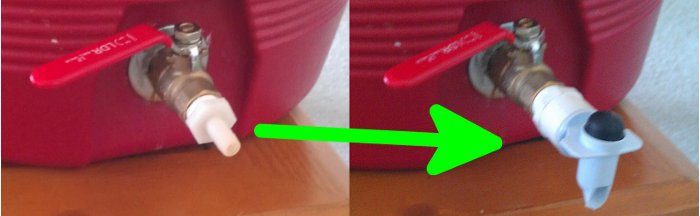
The only tricky bit is the water cooler, which needs to be converted from a mash tun every time we serve. I used PVC cement to attach half inch threads to the normal water cooler attachment.
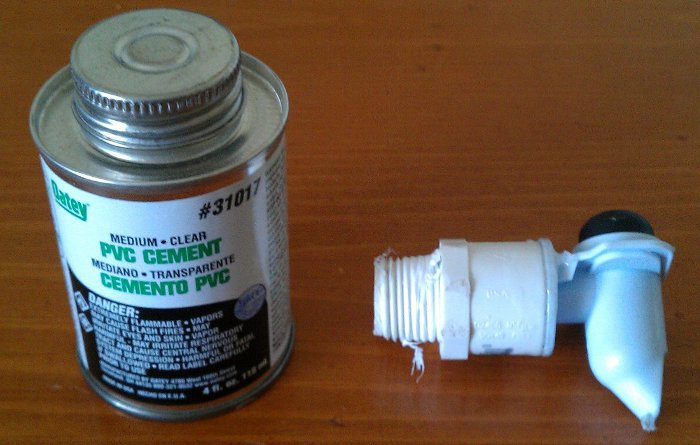
This lets us swap between a hose barb for mashing and a water cooler attachment for serving cold water:
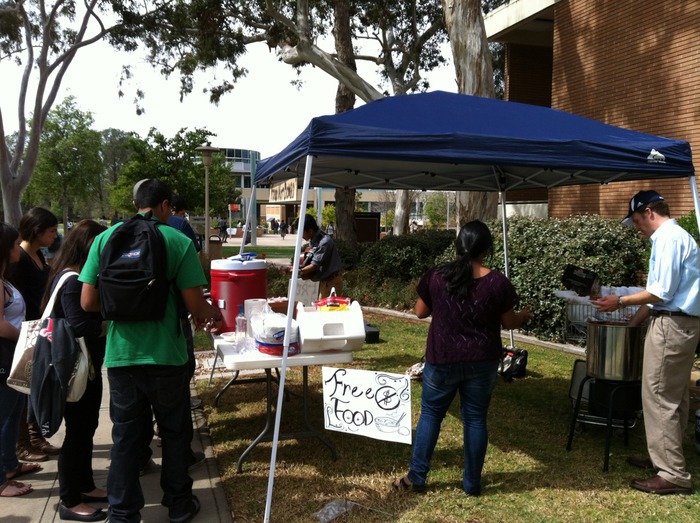
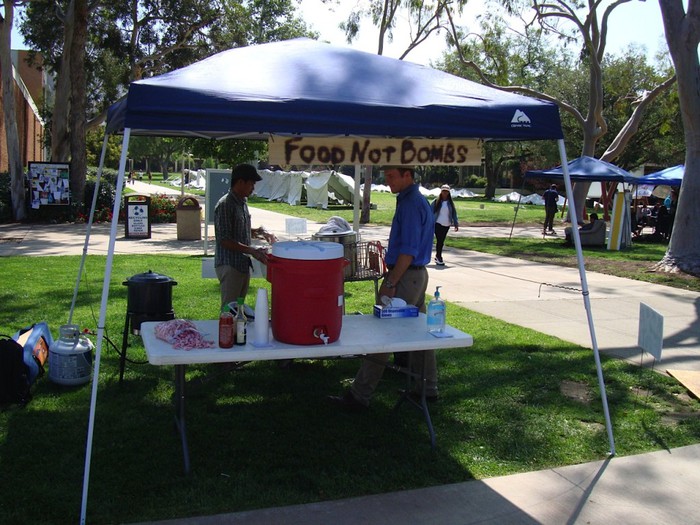
Buying all this equipment new would probably cost around $300-400, but your typical homebrewer will already have most of it anyways. The only other things you need are a table and an awning. Luckily, we were able to borrow those from a local church. Here’s what our final setup looks like:
the recipe
We mostly serve Chinese stew because it is cheap, delicious, and simple to make. If you’re looking for some more ideas, check out food not bombs recipe page, or Ellen’s kitchen. We’ve also tried making chili, but it is very easy to burn the tomato paste when making these giant batches. So be careful!

We purchase these ingredients from Costco for a total of $19.96 after taxes, but it should be pretty cheap anywhere:
(20 lbs) potatoes
(10 lbs) onion
(10 lbs) carrots
(2 lbs) broccoli
(2 gallons) rice (This actually comes in 50 lbs bags, and you get enough for many feedings)
You could also add some chopped beef if you wanted, but we prefer serving vegetarian food so that more people will be able to eat it. Anyways, there’s so much flavor in this dish from the spices that adding meat doesn’t really make it taste any better.
The spices are:
10 oz freshly chopped ginger
25 bay leaves
25 star anise
3 Tbsp Schezuan pepper (Most peppers make your mouth taste hot, but this pepper makes your mouth taste cold!)
6 Tbsp chili powder
1 cup minced garlic
2 cups soy sauce
4 Tbsp corn starch (this thickens the water, turning it from a soup into a sauce)
I personally prefer my Chinese food to have a lot of spice in it, but this version is pretty mild so that everyone can enjoy it. We usually leave bottles of hot sauce and soy sauce available so that people can spice their bowls exactly how they want it.
All of these ingredients can be found at your local Asian food market. Buying in bulk, it costs us about $20 for enough spices for about 10 meals.
Cooking Instructions
Cooking lunch for 150 really isn’t very different than cooking for only 5. The only difference is that the pots are bigger, and things take a little more time. Since we’re distributing food to the public, we also have to follow certain safety laws, like getting licenses and permits. Due to these regulations, all our food must be cooked at the site where we plan to cook it. So we make some preparations in the kitchen, then take everything to the site and start cooking.
In the kitchen:
Rinse all vegetables, then chop carrots, onion, and potato into 1/2 inch cubes. This takes 2 people about an hour if you chop quickly.
Fill the 10 gallon pot with the chopped potatoes and 2 gallons of water
Fill the 5 gallon pot with the remainder of the vegetables (we don’t want to add all the vegetables to the large pot before bringing it to a boil to prevent burning)
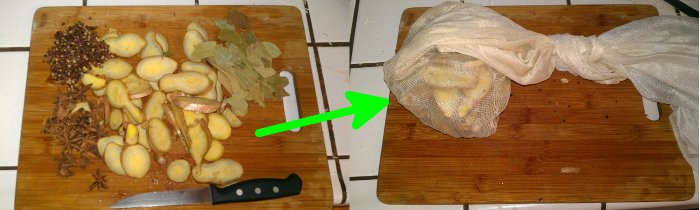
Chop the ginger into thin strips. Place ginger, bay leaves, star anise, and Schezuan pepper into the hop bag. All of these spices make the water taste great, but you don’t want to accidentally bite into them!
Then we load everything into a truck and drive to the site. We setup our kitchen, and begin cooking:
Bring the 10 gallon pot, with potatoes and water to a boil
Add the rest of the vegetables. Bring to boil
Once boiling, add the hop bag and the rest of the spices.
Stir thoroughly to prevent burning on the bottom of the pot
The vegetables will be cooked in about 20 minutes, but the longer you leave them in there, the more flavors they’ll absorb. I usually let the pot simmer for between 30 minutes to an hour, depending on how much time I have until serving.
Once done, take the 8 gallon pot off the burner and allow it to cool as you cook the rice. Add 4 gallons of water to the 2 gallons of rice. (Because there’s room in between rice grains, this still manages to barely fit in the 5 gallon pot.)
Serving
It’s ready! At last! How will we eat it?!
Using paper plates and plastic spoons is by far the easiest, but it also adds to your expenses. Altogether, disposable utensils cost about 20 cents per meal, making it half of your overall expenses for serving!
We usually serve each bowl with one big spoon full of rice, and two of vegetables. Make sure to add plenty of sauce, since that’s where all the flavor is! Obviously, the amount you put in each bowl determines how many people you’re going to feed. We usually end up serving between 120-150 with this meal.
Finally, get a local singer to play the guitar while you serve!